 15
15Groundtrack Fuller
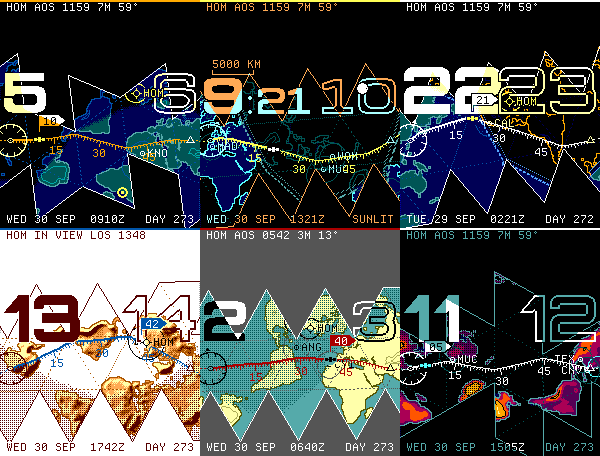
FacesGroundtrack Fuller draws where the Sun, the Moon or a satellite is over the Earth, and where it goes next, on Buckminster Fuller's unfolded globe with the time set along the route. One face. The icosahedron rolls across the screen under the route, printing each face as it touches down, so the route never meets a cut: a satellite's hour unrolls into a band of faces, the Sun's or Moon's day into a strip across the net. The hour is set as on an aeronautical chart: a compass rose, the next hour's reporting point and a mark for each minute. Tracking stations in reach are ringed, and so is home. Follow one of 68 satellites, from space stations and Starlink to GPS and weather, or find any other at CelesTrak. The Sun and Moon can be marked beside it. Relief, the continental shelf and coastlines come from public-domain elevation data on the watch; the calculated Sun brings night across the net. Thirty-two plates, from paper charts and a portolan to mission-control glass, cockpit HUDs and the Earth at night. A fuel line along the top edge shows battery and phone link; the watch can buzz when the link drops. Its companion, Groundtrack, draws the same routes on a flat map, as two faces: Enroute, an hour chart, and the Plotboard, mission control's world band. The two share their satellites, plates and options but are separate watchfaces with their own settings, and can be installed side by side. The phone sends the Sun and Moon weeks ahead and orbits from CelesTrak days ahead, so the face runs without it. Requires Pebble Time 2. Not for navigation. Source code is on GitHub.
 15
15Groundtrack
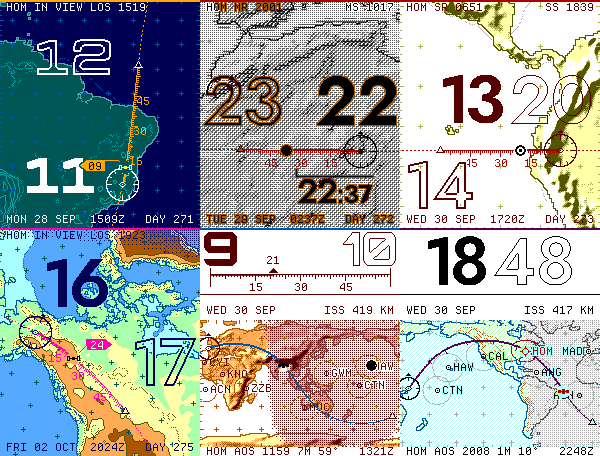
FacesGroundtrack draws where the Sun, the Moon or a satellite is over the Earth, and where it goes next, on a flat chart with the time set along the route. Two faces in one. Enroute is an hour chart: the ground track from this hour's compass rose to the next reporting point, marked each minute, for the Sun, the Moon and the slower, higher satellites. The Plotboard is mission control's wall: a world band with tracking stations and the time on a ruler, sliding tape or clock, showing a fast satellite's hour or a slow one's whole day. Follow one of 68 satellites, from space stations and Starlink to GPS and weather, or find any other at CelesTrak. The Sun and Moon can be marked beside it. Relief, the continental shelf and coastlines come from public-domain elevation data on the watch; the calculated Sun brings night across the map. A home station gives sunrise and sunset or the satellite's next pass. Thirty-two plates, from paper charts and a portolan to mission-control glass, cockpit HUDs and the Earth at night. A fuel line along the top edge shows battery and phone link; the watch can buzz when the link drops. Its companion, Groundtrack Fuller, draws the same routes on Buckminster Fuller's unfolded globe, rolled along the track so the route never meets a cut. The two share their satellites, plates and options but are separate watchfaces with their own settings, and can be installed side by side. The phone sends the Sun and Moon weeks ahead and orbits from CelesTrak days ahead, so the face runs without it. Requires Pebble Time 2. Not for navigation. Source code is on GitHub.
 62
62Dymaxion
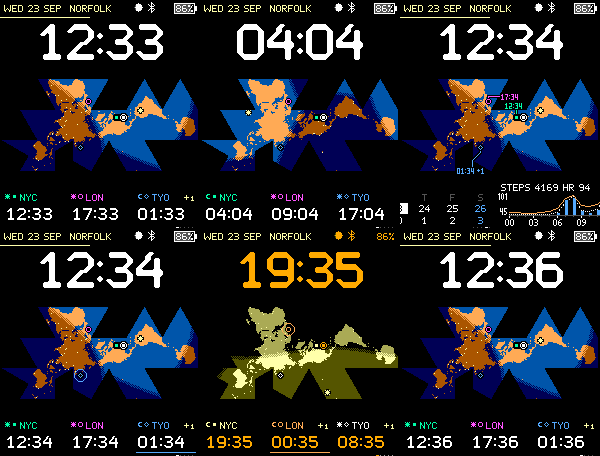
FacesA watch face built on Buckminster Fuller's Dymaxion map, which unfolds the globe onto the twenty faces of an icosahedron without splitting a continent. Fuller called it a deck plan of Spaceship Earth: one island in one ocean, with no country at the center. Sunlight crosses the map through the day; city lights come on at night. An optional Moon marks where it is overhead, shaded for its phase. Turn the map 180° while keeping its labels upright. Up to three other time zones can sit in the bottom panel, beside the clock, between the clock and map, or by each city on the map. Daylight saving is handled per zone. The bottom panel offers weather, sunrise and sunset, a two-week calendar, humidity, tides and Pebble Health. Tides follow the nearest NOAA station as you travel, or Open-Meteo's modelled sea level anywhere else. Panels change on a wrist flick, a timer, or when rain or a turning tide approaches. The top bar has its own Moon, battery gauge, Quiet Time mark and step line. Choose from twenty-five palettes, custom colors and eight clock typefaces, with a preview in the phone settings. Fuller's word for doing more with less was ephemeralization. The map is redrawn at an interval rather than every minute, and a power saver cuts redraws at night or during Quiet Time. The face and its settings speak 19 languages, including Chinese, Japanese, Korean, Russian and Arabic. Requires Pebble Time 2. Automatic city, weather and tides use the phone's location. Health stays on the watch. Screenshot weather and tides are examples. Source code is on GitHub.